
You do not have to pick one floor for the whole house. Most homes do better with a different answer in different rooms. The right choice depends on how wet the room gets, how hard people are on it and how it feels to walk on.
We already compare two of the options head to head in our LVP vs hardwood guide. This guide adds laminate and goes room by room.
Key takeaways
- Moisture decides the basement, kitchen and bathroom. Wear and feel decide the living areas.
- LVP is the usual basement floor. Tile is the usual full bathroom floor.
- Laminate is a good choice in dry rooms but it does not like standing water at the seams.
- Hardwood is the classic choice upstairs and on stairs, and it is the only one of the three you can refinish.
- Keep a few spare planks from any install. Repairs go much easier with matching material.
The three floors in one paragraph each
LVP (luxury vinyl plank) has a vinyl core with a printed wood look. The surface is waterproof, the feel is a little soft and quiet, and you cannot refinish it. When the wear layer is gone, planks are replaced.
Laminate is a printed layer over a fiberboard core. The surface is hard and scratch resistant. The core is the weak point: if water gets into the seams and sits there, the edges can swell. Many newer products are water resistant, so check the rating on the one you like.
Hardwood is real wood, solid or engineered. It looks and feels the way nothing else does, it can be sanded and refinished, and it moves with humidity. It is the least forgiving of water.
Basements
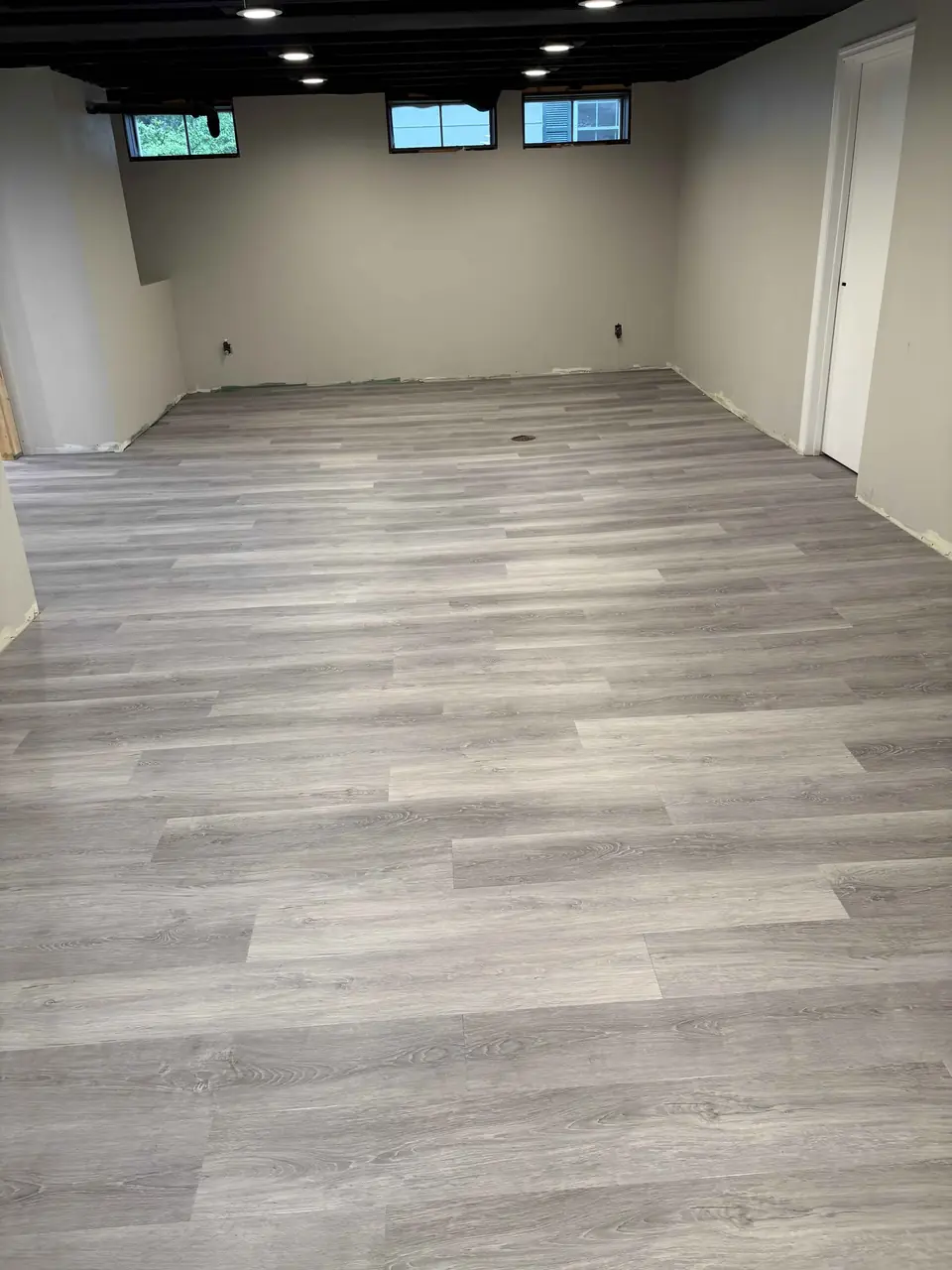
LVP is the usual answer below ground. It shrugs off damp air, it is comfortable to stand on and it goes down over a concrete slab once the slab is flat and dry. Laminate is a risk in any basement that has ever taken on water. Solid hardwood does not belong below grade. Engineered hardwood can work on a dry, well-prepared slab, but it is a bigger bet.
Before any floor goes down, the slab gets checked for moisture and flatness. Skipping that check is how floors fail in basements, whatever the material is. Our LVP flooring installation page explains how we handle it.
Kitchens
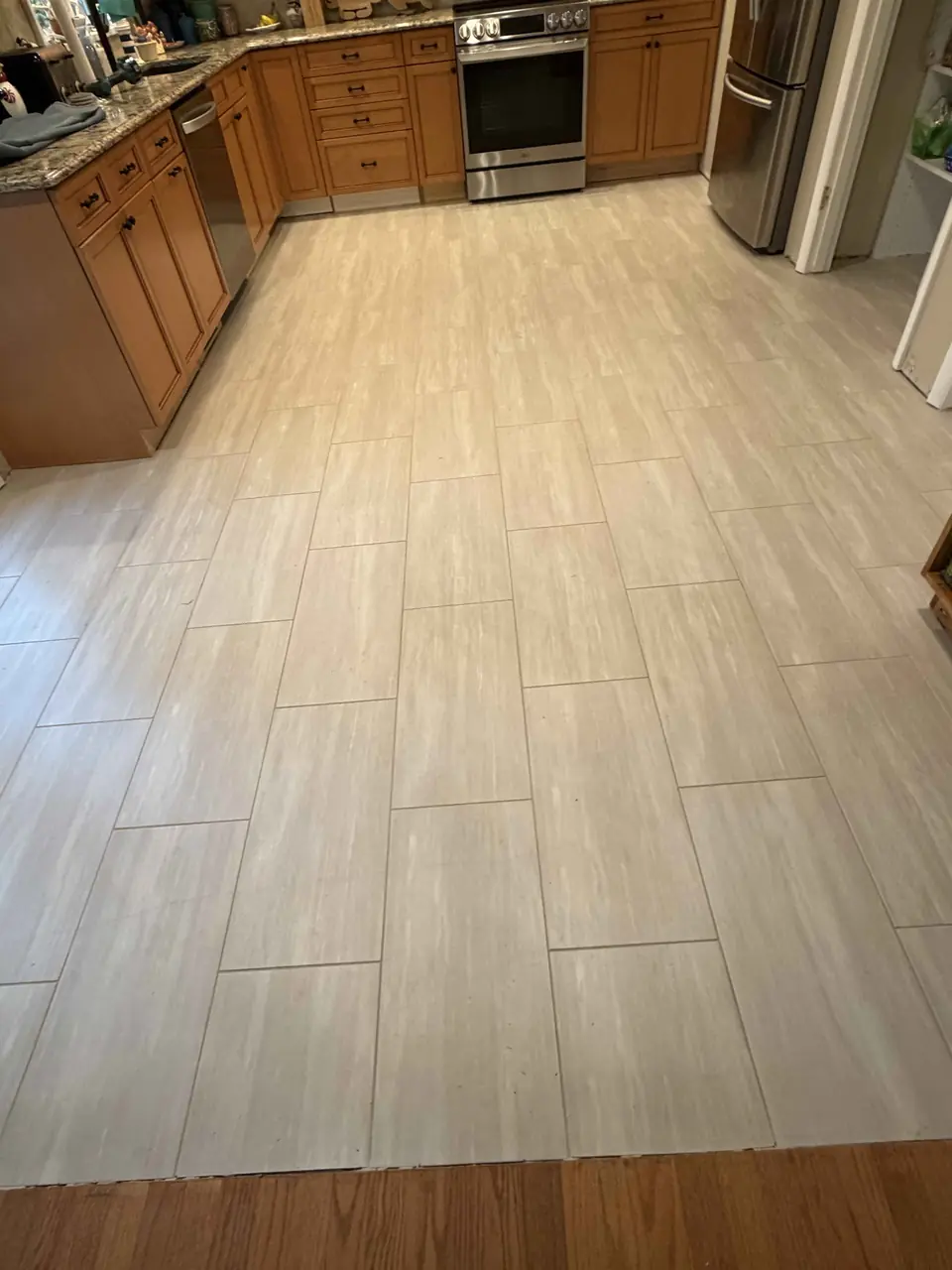
Kitchens get spills, dropped pans and a lot of foot traffic. LVP handles all three well. Laminate works in a kitchen that stays dry and has a good seal at the edges, but a dishwasher or refrigerator leak can do real damage to it. Hardwood is beautiful in a kitchen and many people want it, but you need to wipe spills quickly and watch the floor around the sink, dishwasher and ice maker line.
Ask your installer how the floor will meet the cabinets. Floating floors need room to move, and heavy cabinets should not pin a floating floor in place.
Bathrooms and laundry rooms
Tile is the best floor for a full bathroom with a tub or shower. It handles water, steam and wet feet, and it stays put. Hardwood and laminate are poor choices there.
LVP is a reasonable floor for a half bath, a laundry room or a mudroom, where water shows up as the occasional splash and not a daily soaking. Seal the edges and keep the transitions tight.
Living rooms, bedrooms and dining rooms
This is where hardwood earns its place. It feels solid, it ages well and a worn floor can be sanded back to fresh wood. LVP and laminate both give a wood look at a more practical level of care. Think about the household: large dogs, small kids and heavy furniture favor a harder wearing floor. A quiet bedroom for adults favors whatever feels best underfoot.
Laminate can sound hollow if it is laid over a thin pad. Hardwood and LVP over a good base usually sound more solid. Sunlight fades real wood over time, so rugs and window treatments can help in south-facing rooms.
You can buy any of these from us with or without installation. The flooring store page covers what we sell.
Stairs
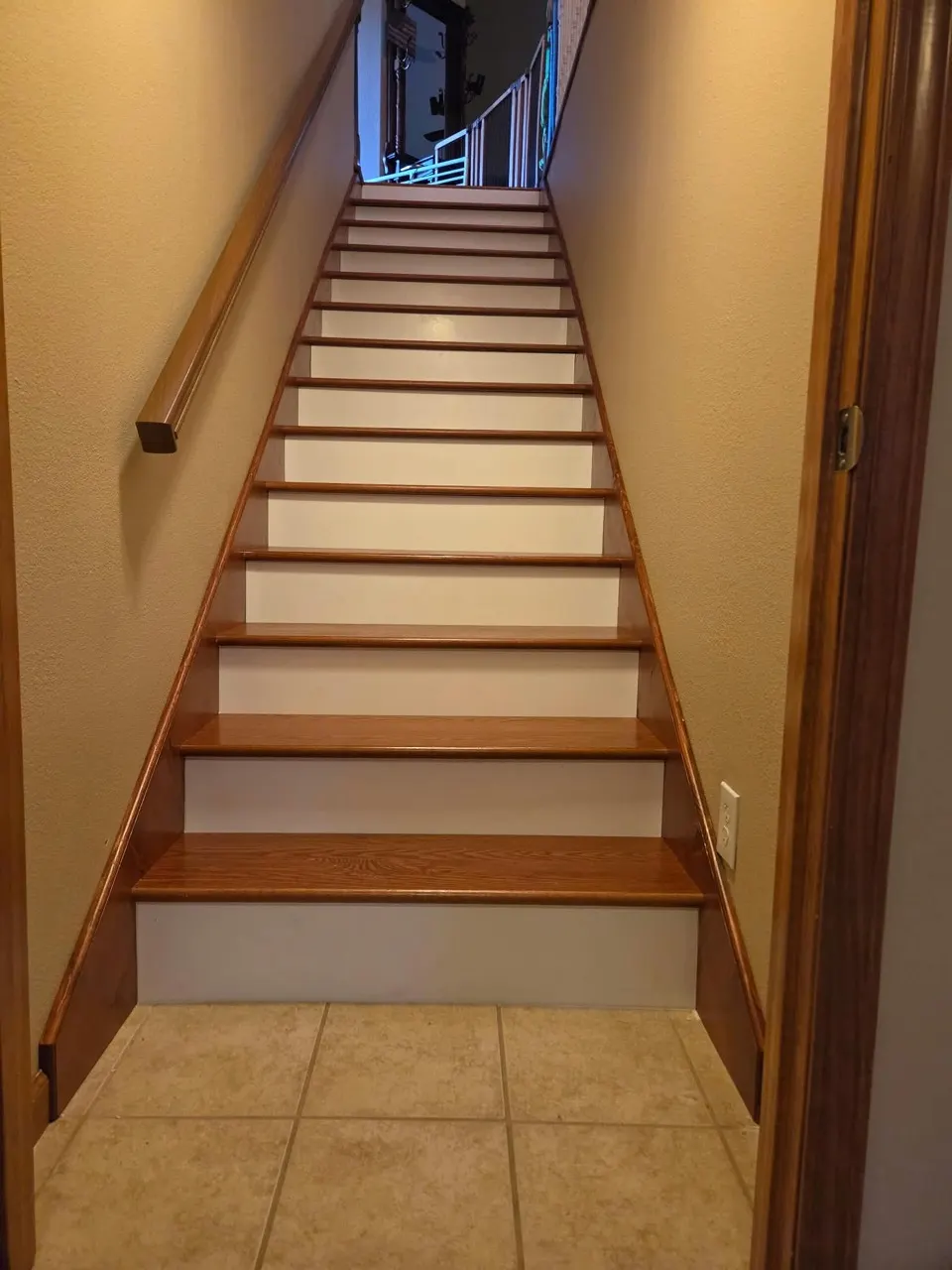
Stairs are the most demanding spot in the house. Each step needs a tread and a nose that match the floor around it. Hardwood treads are the classic choice and can be refinished. LVP and laminate both have matching stair nosing, and the result can look clean, but the pieces need to be fastened and glued correctly because stairs take hard impact.
Stairs take longer to finish than the same area of open floor. Plan for that, and pay attention to grip, because a slick finish on a step is a fall waiting to happen.
Repairs and spares
A scratched hardwood floor can be sanded, and damaged boards can be cut out and replaced. A damaged LVP plank can often be swapped, especially with click planks or glue-down planks. Laminate planks can be replaced too, but a click-lock floor may mean lifting several rows to reach the damaged piece.
With any of the three, keep a few unopened boxes or a few spare planks from the same batch. Colors and patterns shift between production runs, and a plank bought three years later may not match.
Common questions
Is laminate waterproof?
Not in the way LVP is. The surface sheds spills, but the fiberboard core swells if water gets into the seams and sits. Some products are labeled water resistant and are built to hold up better, so check the manufacturer's rating.
Can LVP go over existing tile?
Often it can, if the tile is flat and solid. Grout lines can show through a thin plank, so they may need to be filled first. We check the existing floor at the estimate and tell you what it needs.
Do I need underlayment?
It depends on the product. Some planks come with a pad already attached, and some need a separate one. The right underlayment also depends on the subfloor, so ask the installer what goes under your floor and why.
Can one floor run through the whole house?
Yes, and it can look great, but the wet rooms may need something different. Many homes use hardwood or LVP through the main level and tile in the bathrooms. We plan the transitions so floor heights line up.
Where can I see samples?
We bring samples to your home, so you see them in your own light. You can also see samples at our showroom in Maryland Heights, by appointment. Call (314) 745-5930 to set a time.